A measurement problem is a chain of interdependent decisions, from choosing the sensing principle to designing a housing that will work in the field for years. OMSENS carries out this entire chain in-house. The stages below apply both to the development of our standard products and to customer-specific sensor projects.
The quantity to be measured, ambient conditions (dust, humidity, temperature, vibration, chemicals), required accuracy, output type and volume target are defined together, and the most suitable sensing principle is selected.
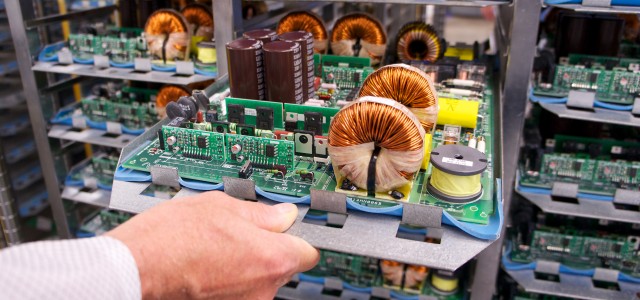
Analog front end, signal conditioning, microcontroller, power stage and protection circuits are designed with EMC and industrial supply conditions (24 V DC / 220 V AC, transients, reverse polarity) in mind.
Filtering, calibration algorithms, compensation (temperature, build-up, ambient light) and communication protocols (Modbus RTU, UART, 4-20 mA) are developed as firmware.
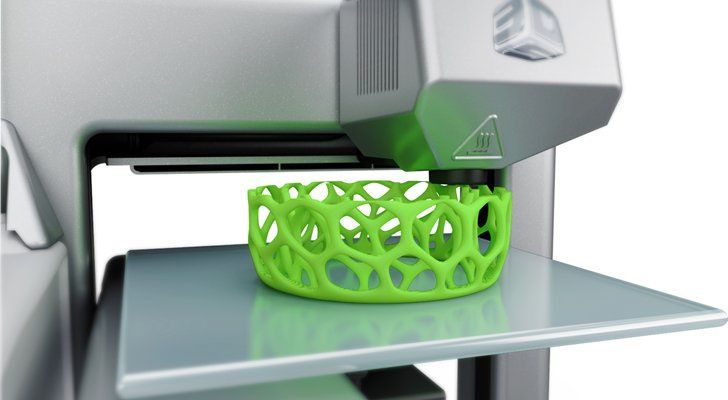
Housing, probe, shaft, paddle and fittings are designed with 3D solid modelling, taking IP protection, pressure and ease of installation into account. Rapid prototypes are produced by 3D printing and CNC.
Functional prototypes are tested in the lab and then in the real field (silo, tank, cabinet); measurement repeatability, long-term stability and failure scenarios are verified.
A test procedure and reference calibration points are defined for each sensor. Products with analog outputs are calibrated against reference values and the results are recorded by serial number.
Repeatable production through SMD assembly, soldering, programming, conformal coating, mechanical assembly and final testing; batch-based quality control.
Datasheets, wiring diagrams, installation and calibration manuals, conformity and export documents are prepared.
Installation and commissioning support, spare parts (probes, paddles, electronic boards) and on-site calibration service.
For measurement needs outside our catalogue, we develop project-specific sensors and measurement systems. On our existing product families, probe length, housing, output type, communication protocol and software behaviour can be adapted; for projects that require an entirely new sensing principle, the process is built from scratch – from feasibility to series production.


Schematic and PCB design, analog signal conditioning, power electronics, EMC-compliant design.
STM32, dsPIC and ESP32 based firmware; Modbus, UART, CAN; OTA update infrastructure.
3D solid modelling, 3D printing and CNC prototyping, housing and probe manufacturing, IP-rated enclosures.
Functional testing, calibration, long-term operation tests, serial-number-based records.
Describe your measurement need, ambient conditions and target quantities; we will suggest the most suitable approach.
Send a Project Request